 Simply Fluent


When Progress Slows Down
You remember the early days of learning your target language. Every week brought visible progress. New words stuck easily. Grammar rules clicked into place. You moved from "complete beginner" to "can hold a basic conversation" in what felt like no time at all.
And then... nothing.
You're still studying. Still showing up. Still putting in the hours. But the progress that used to be so visible has seemingly evaporated. You can have everyday conversations, but you stumble when the topic gets complex. You understand the news, but novels still feel like a slog. You're not a beginner anymore, but you're definitely not advanced, either.
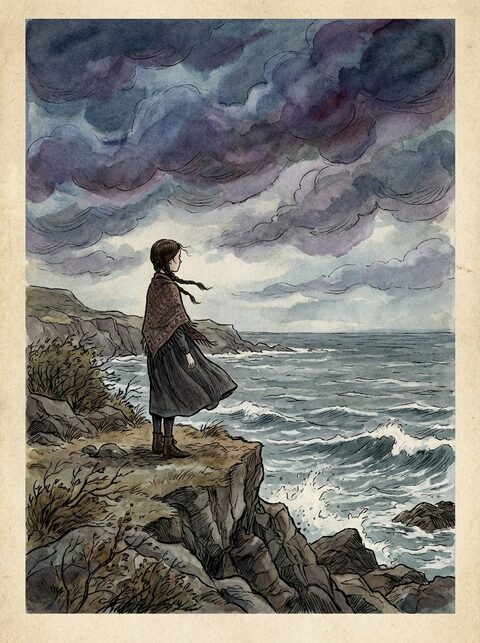
Welcome to the intermediate plateau. It's one of the most frustrating experiences in language learning. But here's the thing: it's not a sign that something is wrong with your ability. It's a common stage that a lot of learners pass through, and there are ways to push past it.
What Is the Intermediate Plateau?
Linguist Jack Richards wrote about it in a 2008 booklet, Moving Beyond the Plateau. He describes learners at the intermediate level who "appear to have reached a plateau in their language learning and do not perceive that they are making further progress," however much time and effort they put in. Their language is good enough for daily life, but not refined enough for professional, academic, or deeply personal expression.
Richards describes it at the intermediate level, which on the Common European Framework of Reference (CEFR) roughly means B1-B2. At this stage, you can:
- Handle most everyday situations
- Express opinions on familiar topics
- Understand the main points of clear speech
- Read straightforward factual texts
But you struggle with:
- Abstract or nuanced discussions
- Understanding humor, sarcasm, and cultural references
- Reading authentic literature without significant effort
- Expressing complex ideas precisely
It feels like you have learned your target language. Past tense. Like all the learning happened before and now you are just existing in this middle ground. Not bad, not good. Just stuck.
Why Does the Plateau Happen?
The Low-Hanging Fruit Is Gone
In the beginning, everything you learn is useful immediately. Learning the word "want" opens up hundreds of sentences. Learning past tense lets you tell stories. Every new piece of knowledge dramatically expands what you can do.
At B1-B2, the high-impact learning has already happened. The words you need to learn now are less frequent, more context-specific, and individually less transformative. In Paul Nation's 2006 analysis of the novel Lady Chatterley's Lover, the most common 1,000 word families made up about 81% of the words. The fourth 1,000 added less than 2 percentage points. That's why going from 3,000 to 4,000 word families doesn't feel nearly as dramatic as going from 0 to 1,000.
Classroom Lessons Help Less
Beginners benefit enormously from structured lessons. They need someone to explain how verb conjugation works or what word order looks like. Later, that stops working as well. Richards quotes a description of this from the teacher's side: the teacher "finds that his input, no matter how much he or she tries to make it interesting, is no longer as easily taken in by the learners as it used to be."
But the knowledge that separates B2 from C1 isn't the kind you can easily teach in a classroom. It's knowing that "make a decision" sounds natural but "do a decision" doesn't. It's understanding that "I see" can mean "I understand" depending on tone. It's the difference between grammatically correct and naturally fluent.
This knowledge comes from massive exposure to authentic language, from hearing and reading thousands of natural sentences until patterns become intuitive. A textbook doesn't have room for that many examples.
Comfortable Enough to Stop Pushing
There's a psychological dimension too. When your language skills are good enough to get by, the urgency fades.
You can live your life in the language. You can work, socialize, do everything you need. So why would you spend two hours studying verb forms you will use once a month? The motivation dries up.
How to Recognize You're Plateauing
Sometimes the plateau sneaks up on you. Here are signs that you might be stuck:
- You haven't learned a new word in weeks, not because there aren't new words, but because you've stopped noticing them
- You use the same phrases over and over, finding safe, comfortable patterns and sticking to them
- You avoid complex topics, steering conversations toward subjects where your vocabulary is strongest
- You understand "enough", catching most of what you hear and filling in the rest from context
- Your errors have fossilized, and you make the same mistakes you made months ago
- Reading feels perpetually hard because authentic texts don't seem to be getting easier
If several of these resonate, you're likely on the plateau. The good news? Recognizing it is the first step to moving past it.
Why Extensive Reading Is Your Best Way Through
Of all the strategies for breaking through the intermediate plateau, extensive reading (reading a lot of material at a level you can mostly understand) is one of the most researched.
It Provides the Volume You Need
Moving from B2 toward C1 takes a lot of exposure. You need to encounter thousands of natural sentences to internalize the patterns that make language feel automatic rather than effortful.
Reading is one of the most efficient ways to get that exposure. Listening to podcasts, watching shows, playing games, listening to music: all useful, but none of them let you control the pace the way reading does. You pause when you need to, re-read what you missed, and move quickly through what you already understand. That combination of volume and control is hard to get from other kinds of input.
You may have been studying your target language for years without reading much in it. If so, even a book a month adds a lot of input you weren't getting before.
It Teaches What Textbooks Can't
The subtle, high-level knowledge that separates intermediate from advanced (collocations, register, idiomatic usage, pragmatic meaning) is exactly what you absorb through extensive reading. You learn that French speakers say "prendre une décision" (take a decision) rather than "faire une décision" (make a decision), not because someone taught you, but because you've seen it written that way a hundred times.
It Reintroduces Natural Repetition
At the intermediate level, the words you need to learn are less frequent. You might encounter a word once in a textbook chapter and never see it again. But in a 300-page novel, important vocabulary appears repeatedly in varied contexts. This spaced, contextual repetition is exactly what your brain needs to move words from "I've seen that before" to "I know that."
It Rebuilds Motivation
Perhaps most importantly, reading gives you something that grammar exercises at the B2 level rarely provide: enjoyment. When you're absorbed in a story, you're not "studying." You're experiencing. And that sustained engagement is what powers you through the plateau.
When your textbook becomes so boring you cannot open it, try a novel. The first one is hard. At some point, maybe by your third book, maybe during the first if it's a long one, you may notice yourself using words in conversation that you never formally studied.
A Practical Reading Plan for the Plateau
Step 1: Assess Your Current Level Honestly
If you're at B1, graded readers at B1-B2 level, young adult fiction, or simplified news articles are a comfortable choice. If you want something you'll look forward to coming back to, you can also try contemporary fiction written for native speakers; genre fiction like thrillers, romance and mystery is a good place to try.
The key metric: you should know most of the words on a page. For reading without any help, Hu and Nation estimated in 2000 that you need to know about 98% of the words in a story to understand it. In their study, only 6 of 17 readers did well on a comprehension test at 95%, and 4 of 16 at 90%. With a translation one press away, you can go below 98%: a text where you know around 90% of the words becomes workable, because an unknown word no longer stops you, and you meet a lot of new vocabulary. Reading with help also seems to teach more words. In a 2020 meta-analysis of 42 studies, Yanagisawa, Webb and Uchihara found that learners who read with glosses (translations or definitions next to the text) learned more of the new words than learners who read without them. If you almost never meet a word you don't know, the text is too easy to challenge you.
Step 2: Set a Volume Goal, Not a Comprehension Goal
Don't aim to understand every word. Aim to read a certain number of pages per day or per week. Start modest. Even 10 pages a day adds up to a 300-page novel per month.
Try setting a simple rule: twenty pages a day, no matter what. Some days you will understand almost everything. Some days you will be lost in a fog. Keep going. As your vocabulary grows, the fog days become rarer.
Step 3: Look Up Words Without Leaving the Page
At the plateau, you know enough to read authentic texts, but you still hit enough unknown words to break your flow. What helps is a way to check a word quickly, so you keep reading.
That's what I built Simply Fluent for. You select a word and see what it means in that sentence, without leaving the page. A translation you save is shown above that word in every book you read after that, so you never look the same word up twice. When you know it, you mark it memorized: the translation is hidden, the word stays highlighted, and you can open the translation again if you need it.
Step 4: Read Widely, Not Just Deeply
Don't just read novels. Mix in:
- News articles (current events vocabulary)
- Blog posts (informal register)
- Opinion pieces (argumentative language)
- Short stories (varied styles and voices)
- Non-fiction on topics you care about (specialized vocabulary)
Each type of text exposes you to different vocabulary, different sentence structures, and different ways of expressing ideas. Together they give you a wider range than any single type of text would.
Step 5: Notice Patterns, Don't Study Rules
As you read, pay attention to phrases and constructions that recur. Don't pull out a grammar book. Just notice. "Oh, they used the subjunctive there." "That's an interesting way to express disagreement." "I keep seeing this word paired with that preposition."
This is the idea behind Richard Schmidt's noticing hypothesis, which Richards also discusses: that learners pick up new forms from input when they notice them. How much noticing is needed is still debated, but it costs you nothing while you read. You're not memorizing rules; you're building intuition.
Other Strategies That Complement Reading
Reading is powerful, but it works best as part of a broader approach:
- Consume other authentic media: Podcasts, TV shows, and movies complement reading by providing spoken input. Try watching shows in your target language with target-language subtitles, it combines listening and reading.
- Write regularly: Even short journal entries force you to produce language, which reveals gaps that passive consumption doesn't.
- Speak with native speakers about what you've read: Discussing a book or article you've read gives you a natural reason to use new vocabulary in conversation.
- Track your progress differently: At the intermediate level, progress isn't visible in the same way as beginner stages. Instead of counting words learned, track books finished, articles read, or conversations held. Measure engagement, not just knowledge.
The Plateau Ends
While you're on the plateau, it can feel like nothing is happening. But you are still learning, and when you look back later, you can see the difference. It's just hard to see while you are in it.
The intermediate plateau is real, it's frustrating, and it's entirely normal. It's not a sign that you've reached your limit. It's a sign that the nature of your learning needs to change. Less classroom, more immersion. Less studying about language, more experiencing language. Less memorizing, more reading.
Pick up a book in your target language today. Read 10 pages. Then read 10 more tomorrow. The plateau doesn't break all at once. It erodes, page by page, until one day you realize you're past it.
And that day is worth every frustrating moment it took to get there.