 Simply Fluent


Classic Literature, Made Readable for Language Learners
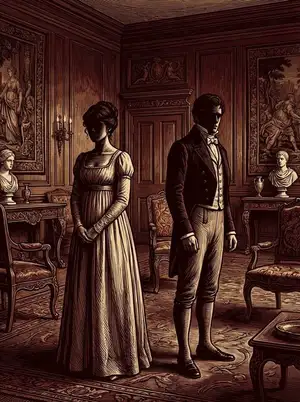
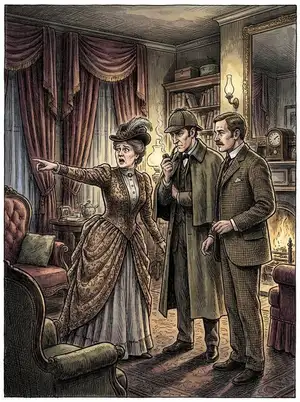
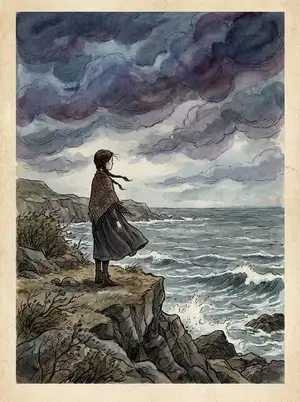
Simply Fluent version 1.9 introduces Modernized Classics: full-length works from Jane Austen, Jules Verne, Arthur Conan Doyle, and many more, carefully rewritten in modern, everyday language and translated into over 40 languages.
Not summarized. Not simplified. Not "adapted for learners." Modernized. The stories are complete and faithful to the originals. The characters, plots, themes, and emotional arcs are untouched. What I've changed is the language itself: replacing archaic vocabulary with modern equivalents and updating sentence structures to reflect how the language is written today.
The result is a library of classic literature that reads the way it would if these authors were writing today.
Why This Matters
Classic literature is some of the best material for language learning. Rich vocabulary, complex characters, stories that have captivated readers for centuries. There's just one problem: Victor Hugo's French is 160 years old. Dostoevsky's Russian, Cervantes' Spanish, Austen's English, they all use language that's dramatically different from how people write and speak today.
You pick up Les Misérables because you want to read a masterpiece in French. By page three, you've encountered verb tenses your textbook never mentioned and vocabulary that hasn't been used since Napoleon.
This isn't a comprehension problem. It's a historical language problem. You're not struggling because your French is bad. You're struggling because the language is 160 years old.
I've removed that barrier.
Why Modernize Instead of Simplify?
This distinction matters. Simplified classics (the kind you might have read in school as "graded readers") are rewritten to match a specific language level. They use shorter sentences and a controlled vocabulary, and the story is often shortened to fit. That makes them a good way in at the lower levels, but it's a different thing.
That's not what I've done.
Modernization preserves the complexity of the original text. The sophisticated vocabulary stays, it's just contemporary sophisticated vocabulary instead of archaic sophisticated vocabulary. The complex sentence structures stay, they're just structured the way a modern author would write them. The full story stays, every subplot, every character, every thematic layer.
Think of it like restoring a painting. You're not changing the composition or the subject. You're removing the grime that built up over centuries so you can see what the artist intended. The language that Hugo, Dostoevsky, Austen, and Cervantes used was modern and natural when they wrote it. I'm making it modern and natural again.
An Example
Here's a sentence from the original French of Les Misérables:
"Il est des choses plus fortes que l'homme le plus fort."
A French reader today understands it, but it's not how most people write. "Il est des" is an old, literary way of saying "there are", and a learner who has only met "il y a" in class can stall on it.
A modernized version keeps the meaning and the tone:
"Il y a des choses plus fortes que l'homme le plus fort."
Same idea. Same weight. For a language learner, it's one less construction to decode, and a whole novel is full of choices like this one.
What's in the Library
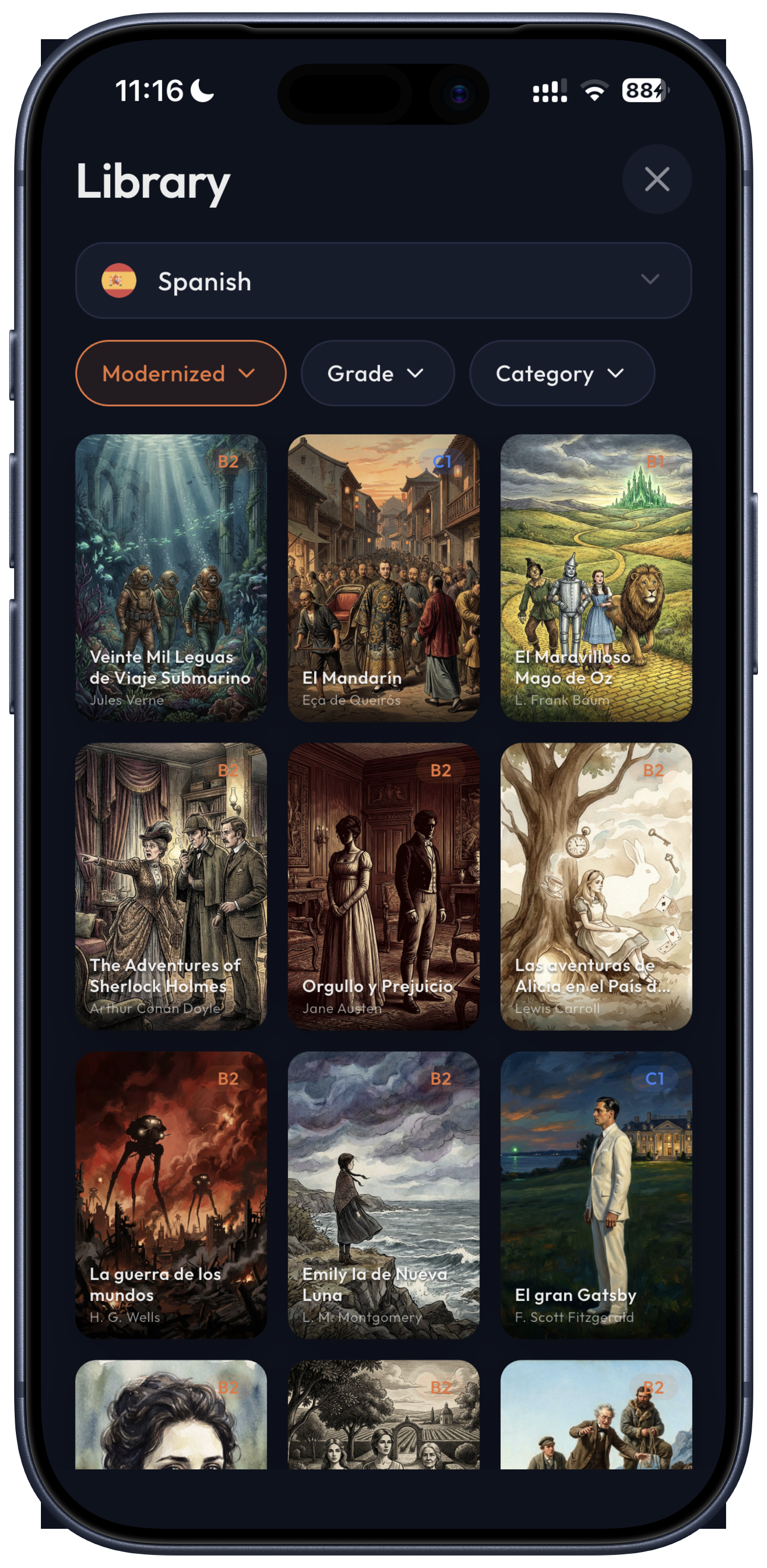
The initial collection focuses on works that are widely known, culturally significant, and rewarding to read. I'm starting with titles that most people have heard of but many have never read in full, let alone in a second language.
The current collection includes novels, novellas, and short story collections from European and world literature spanning the 18th through early 20th centuries. Every title is a complete, unabridged work. I'm not including excerpts or selected chapters. If it's in the library, it's the whole book.
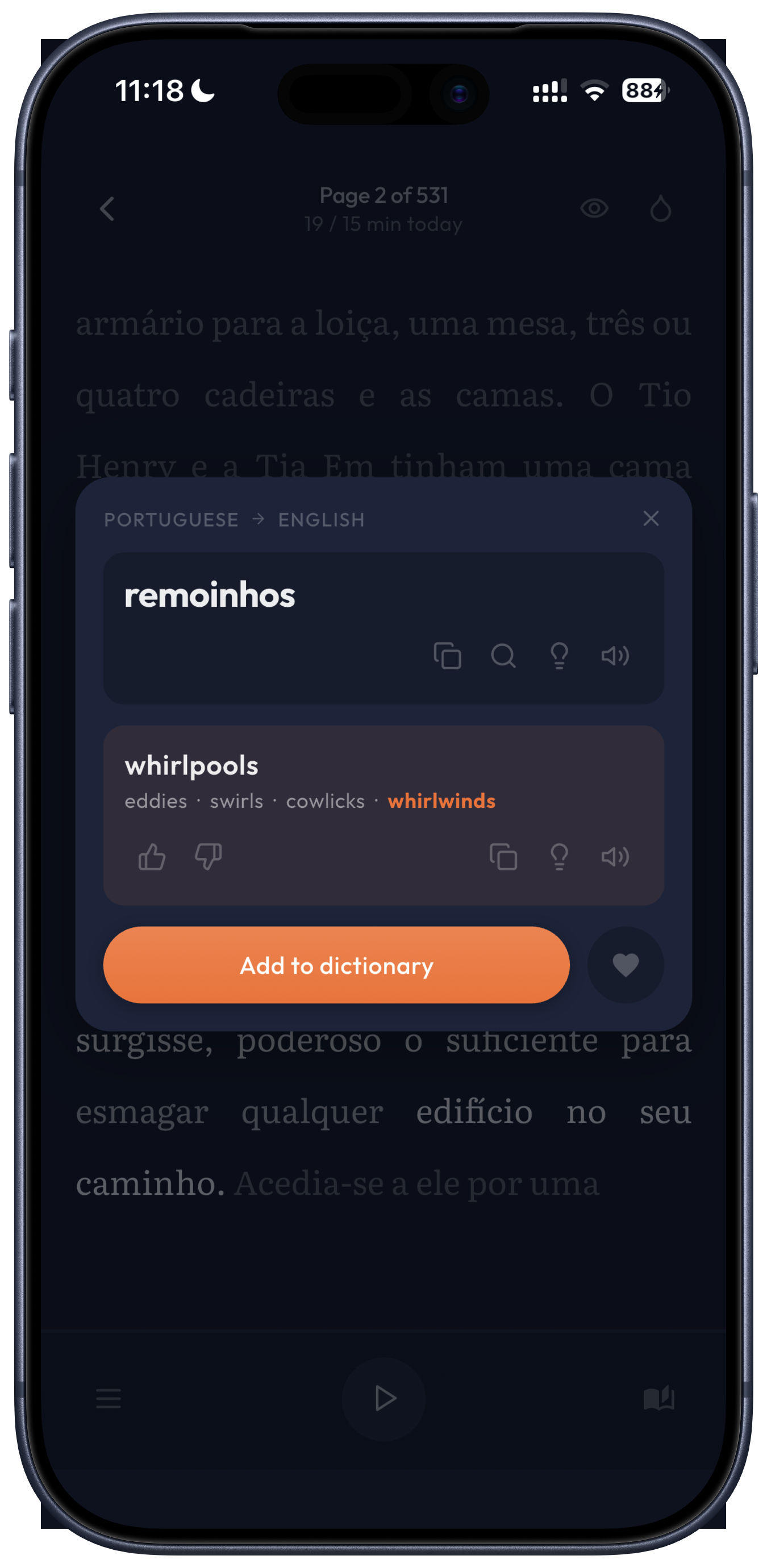
Each modernized classic works exactly like every other book in Simply Fluent. Select any word for an instant translation. Save words to your vocabulary. Build flashcards from the words you encounter. Track your reading progress. Everything you're used to, just applied to some of the greatest stories ever written.
Languages
At launch, modernized classics are available in the languages where I've seen the most demand: Spanish, French, German, Italian, Portuguese, and Swedish, with more languages coming in the weeks ahead. The source texts are from a variety of literary traditions, and I'm translating across languages, so you can read a French classic in German, a Russian classic in Spanish, or an English classic in Italian.
The selection and language coverage will expand over time. This isn't a one-time content drop. It's an ongoing project, and I'm adding new titles regularly.
Why Classics Are Worth Reading for Language Learners
Classic novels use a wider range of vocabulary than contemporary fiction. They describe emotions with more precision, settings with more detail, and social interactions with more nuance. A modernized classic exposes you to vocabulary you won't find in a thriller or romance novel, words that are invaluable for reaching an advanced level.
Long books are also a strength for language learning, not a weakness. Extended exposure to consistent vocabulary and writing style builds momentum. By chapter five, you're no longer adjusting to the author's voice. By chapter ten, you're reading fluently within that author's world.
And there's cultural literacy. When someone mentions Don Quixote, Anna Karenina, or Jean Valjean in conversation, you'll know what they're talking about. Reading a French classic doesn't just improve your French vocabulary. It gives you context for understanding French culture in a way that no textbook can.
How This Fits Into Your Reading Practice
Modernized classics aren't meant to replace the short stories and other books you're already reading in Simply Fluent. They're an addition to your library, another option for when you're choosing what to read next.
Here's how I'd suggest thinking about them:
For Intermediate Readers (B1-B2)
You have enough vocabulary to handle a full novel, and the modernized language means you won't be tripped up by archaic constructions. Start with a shorter classic, a novella or short story collection, and see how it feels. If you're comfortable, move to a full novel. The vocabulary will be challenging in places, but that's the point. You're stretching.
For Advanced Readers (B2-C1)
You're ready for the full experience. Pick a classic you've always wanted to read and dive in. The modernized language means you'll spend your mental energy on the story and the advanced vocabulary, not on deciphering 19th-century syntax. These books will push your vocabulary into territory that contemporary fiction rarely reaches.
Why We Made These Books
I believe that one of the biggest barriers to reading in another language isn't ability. It's access to the right material. Material that's interesting enough to keep you reading, accessible enough to not overwhelm you, and substantial enough to build your skills over time.
Contemporary books are great for this. But the world's literary heritage, centuries of brilliant storytelling across dozens of languages, has been mostly locked away from language learners by the barrier of archaic language.
That barrier is gone now.
The classics have survived for a hundred, two hundred, sometimes three hundred years because the stories are that good. The language they were originally written in was a product of their time. The stories themselves are timeless.
I've updated the language. The stories are the same.
Available Now
Modernized classics are available now in Simply Fluent version 1.9. Update the app and you'll find them in the content library alongside everything else. Browse by language, by author, or by era. Pick something that catches your eye.
And if there's a classic you'd love to see added to the collection, let me know. The library is growing, and your suggestions help me decide what to modernize next.